Is a Hair Transplant Right for Me? Eligibility, Benefits, and Expected Results
Home / Hair Transplant / Is a Hair Transplant Right for Me? Eligibility, Benefits, and Expected Results
Updated On : August 01, 2026 | Category : Hair Transplant | Author: Beverly Hills Hair Restoration Team
Quick Answer
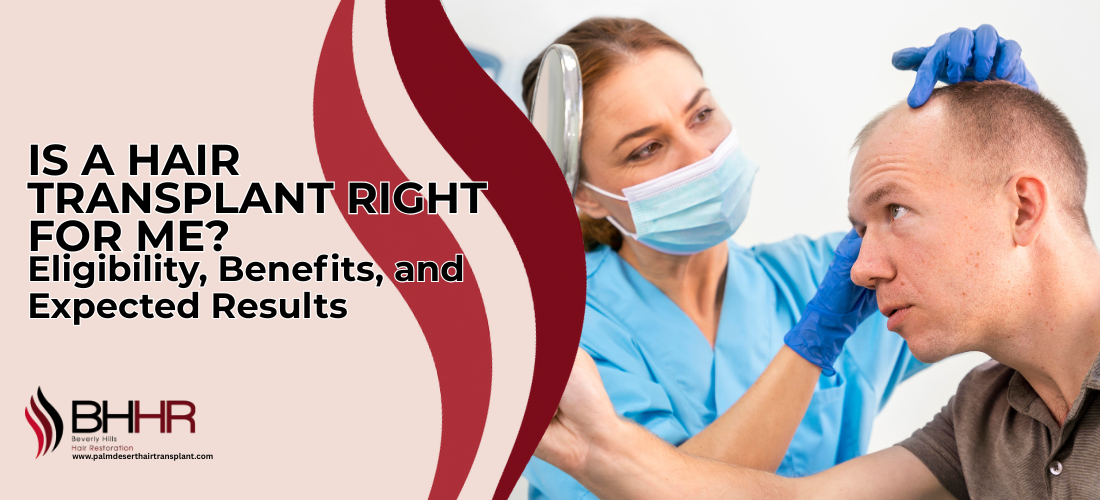
A hair transplant may be the right option if you have permanent hair loss, sufficient donor hair, and realistic expectations. Ideal candidates usually have stable hair loss and enough healthy follicles to achieve natural-looking results. A personalized evaluation with a hair restoration specialist is the best way to determine whether the procedure is suitable for you.
Key Points
- Hair transplants are most effective for individuals with stable hair loss.
- Healthy donor hair is essential for successful hair restoration.
- Not everyone experiencing hair loss is an ideal candidate.
- Results develop gradually over several months and vary by individual.
- Choosing an experienced surgeon and maintaining realistic expectations contribute to better outcomes.
Introduction
If you're experiencing thinning hair, a receding hairline, or bald patches, you may be wondering whether a hair transplant is the right solution. The answer isn't the same for everyone. Your eligibility depends on factors such as the cause and stage of hair loss, the quality and availability of donor hair, your age, overall health, and your expectations for the procedure. While hair transplantation can restore hair naturally and provide long-lasting results, it works best for individuals who meet specific medical and cosmetic criteria. Understanding these factors before choosing treatment can help you make a more informed decision and set realistic expectations.
This guide explains everything you need to know about hair transplant eligibility, the key benefits of the procedure, and the results you can realistically expect throughout the recovery and hair growth process.
Who Is an Ideal Candidate for a Hair Transplant?
A hair transplant is most effective for individuals with the right hair loss pattern and sufficient donor hair. A professional evaluation helps determine whether the procedure is suitable for your specific needs.
- Pattern Hair Loss: Individuals with male or female pattern hair loss often respond well because the condition follows predictable patterns that allow specialists to plan restoration effectively.
- Healthy Donor Hair: Strong hair on the back or sides of the scalp supports natural-looking results.
- Stable Hair Loss: A stable pattern of hair loss leads to more predictable outcomes.
- Good Overall Health: Good health promotes proper healing and recovery.
- Realistic Expectations: Understanding the procedure's benefits and limitations improves treatment satisfaction.
Who May Not Be a Good Candidate?
Although hair transplantation benefits many people, it may not be suitable for everyone. Certain medical conditions and hair loss patterns can affect treatment success.
- Active Scalp Conditions: Scalp infections or inflammatory conditions should be treated before surgery.
- Insufficient Donor Hair: Limited donor hair may reduce the effectiveness of the procedure.
- Extensive Diffuse Hair Loss: Widespread thinning without a stable donor area may require other treatment options.
- Temporary Hair Loss: Hair loss caused by stress, nutritional deficiencies, or medical conditions should be treated first.
- Unrealistic Expectations: Expecting immediate or extremely dense results may lead to disappointment.
Benefits of a Hair Transplant
A hair transplant offers several long-term benefits for suitable candidates experiencing permanent hair loss. While individual results vary, the procedure is designed to restore natural hair growth, improve appearance, and provide lasting results when performed on the right candidate.
- Long-Lasting Hair Restoration: A hair transplant provides a long-term solution for permanent hair loss by relocating healthy hair follicles that are resistant to future hair thinning in most cases.
- Natural Hair Growth: Transplanted hair follicles continue to grow naturally because they retain the characteristics of the donor area, allowing the restored hair to blend seamlessly with your existing hair.
- Improved Hair Density: The procedure increases hair density in thinning or balding areas, creating a fuller appearance and helping restore a more balanced, natural-looking hairline.
- Enhanced Facial Appearance: Restoring hair in areas affected by hair loss can improve facial symmetry and overall appearance, making facial features look more proportionate and youthful.
- Increased Confidence: Many patients report greater self-confidence and improved self-image after achieving natural-looking hair restoration results that better match their desired appearance.
- Permanent Alternative to Temporary Solutions: Unlike temporary cosmetic products or hair fibers, a hair transplant offers a lasting solution by restoring real, growing hair in areas affected by permanent hair loss.
Key Factors to Consider When Deciding on Hair Transplant Surgery
A hair transplant is more than just a treatment for hair loss. Evaluating several medical and personal factors can help determine whether the procedure is the right choice for your individual needs and long-term hair restoration goals.
|
Factors |
Why it Matters |
|
Cause of Hair Loss |
Identifying the underlying cause of hair loss helps determine whether a hair transplant is the most appropriate treatment option. |
|
Hair Loss Stability |
A stable hair loss pattern generally leads to more predictable, natural-looking, and long-lasting transplant results |
|
Donor Hair Quality |
Healthy donor hair with good density is essential for creating natural coverage and achieving successful hair restoration |
|
Scalp and Overall Health |
Good scalp condition and overall health support proper healing, graft survival, and healthy hair growth after the proc edure. |
|
Realistic Expectations |
Understanding the procedure's benefits and limitations helps you make informed decisions and feel satisfied with the final outcome |
|
Surgeon Experience |
An experienced specialist can assess your eligibility and create a personalized treatment plan. |
|
Recovery Commitment |
Following aftercare instructions and attending follow-up visits can support proper healing and hair growth. |
What Results Can You Realistically Expect?
|
Timeline |
What to Expect |
|
First Few Weeks |
Transplanted hairs may shed temporarily as follicles adjust, while the scalp heals and prepares for new hair growth. |
|
3–4 Months |
New hair growth gradually begins as transplanted follicles enter the active growth phase after the initial recovery period. |
|
6–9 Months |
Hair density improves noticeably, with continued growth creating a fuller and more natural-looking appearance over time. |
|
12+ Months |
Transplanted hair reaches greater maturity, delivering final results with improved thickness, coverage, and natural appearance. |
Final Note: A hair transplant takes time to show its full results. Being patient and following your surgeon's advice can help you achieve the best possible outcome.
Why Trust Beverly Hills Hair Restoration for Hair Transplant?
Choosing the right clinic is just as important as choosing the procedure itself. At Beverly Hills Hair Restoration in Palm Desert, patients receive individualized evaluations, evidence-based treatment planning, and care tailored to their unique hair restoration goals.
- Experienced Hair Restoration Team: Our hair restoration team evaluates each patient’s hair loss pattern, donor hair availability, and goals to create a treatment approach focused on natural-looking results.
- Advanced Hair Transplant Techniques: Advanced techniques are selected based on your hair loss pattern, donor area characteristics, and desired outcome to support natural hairline design and long-term results.
- Patient Education: The team explains the procedure, recovery timeline, expected results, benefits, and limitations to help patients make informed decisions.
- Focus on Natural-Looking Results: Treatment planning emphasizes creating a natural hairline and restoring hair in a way that complements facial features.
- Physician-Led Evaluation: Each patient undergoes a detailed assessment of hair loss pattern, donor area quality, and restoration goals before receiving a personalized treatment recommendation.
Conclusion
A hair transplant can be an effective, long-term solution for people experiencing permanent hair loss, but it is not the right choice for everyone. Understanding your eligibility, the benefits of the procedure, and the results you can realistically expect is essential before making a treatment decision. The best outcomes are typically achieved by individuals with healthy donor hair, stable hair loss, and realistic expectations.
If you're considering hair restoration, a comprehensive evaluation by an experienced specialist can determine whether a hair transplant is the most appropriate option for your needs. Dr.John Kahen carefully assesses each patient's hair loss pattern, donor hair availability, and aesthetic goals to develop a personalized treatment plan designed to achieve natural-looking, long-lasting results.
To learn more about your treatment options or determine your eligibility, schedule a free consultation with Dr. John Kahen and take the first step toward achieving your hair restoration goals.
Frequently Asked Questions
At what age should I consider a hair transplant?
There is no single ideal age. Most specialists recommend waiting until your hair loss pattern has stabilized, although eligibility depends more on individual hair loss characteristics than age alone.
Do hair transplants really work?
Yes. Hair transplants can effectively restore hair in suitable candidates by relocating healthy follicles to thinning areas. Success depends on proper candidate selection, surgical technique, and post-operative care.
How long does a hair transplant last?
Transplanted hair follicles generally continue growing for many years because they retain the characteristics of the donor area. However, surrounding natural hair may continue thinning over time.
Is a hair transplant a permanent solution?
In most cases, transplanted follicles provide permanent hair growth. However, future hair loss affecting non-transplanted hair may require additional treatment or long-term maintenance.
Will I need more than one hair transplant?
Some individuals achieve their desired results with one procedure, while others may benefit from additional sessions depending on the extent of hair loss, available donor hair, and future hair restoration goals.