Receding Hairline: Causes, Early Warning Signs, and How to Restore It
Home / Hair Transplant / Receding Hairline: Causes, Early Warning Signs, and How to Restore It
Posted On : September 30, 2026 | Category : Hair Transplant | Author: Beverly Hills Hair Restoration Team
Summary
A receding hairline happens when the hair around the forehead and temples gradually moves backward or becomes thinner. It is often linked to genetics, hormonal changes, aging, or certain types of hair loss. Treatment depends on the cause, severity, and condition of the hair follicles. Options may include medications, PRP therapy, or hair transplant procedures to help manage hair loss and restore the hairline.
Introduction
Noticing your temples becoming more visible or your front hairline slowly moving backward can be concerning, especially when you are unsure whether the change is normal or a sign of ongoing hair loss. Recognizing these changes early can make it easier to understand what is happening and explore suitable treatment options before the recession becomes more advanced.
However, not every change in the hairline has the same cause. Genetics, aging, hormones, and different types of hair loss can all affect the hairline in different ways. In this guide, we will explain the common causes, early warning signs, stages of progression, and available options for restoring a receding hairline.
What Is a Receding Hairline?
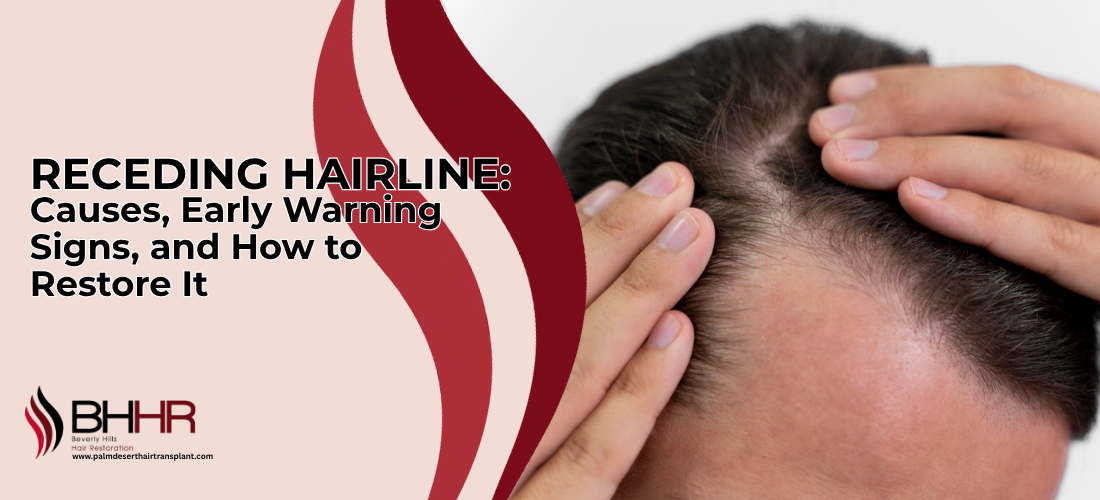
A receding hairline happens when the hair along the front of the scalp gradually moves backward or becomes thinner. It often begins around the temples and may slowly affect the frontal hairline, sometimes creating an M-shaped pattern.
A mature hairline is different from progressive hair loss. As people age, the hairline may naturally move slightly higher and then remain relatively stable. A receding hairline, however, tends to keep moving backward over time and may be accompanied by thinning, reduced density, or finer hairs around the temples and forehead. Tracking changes over several months can help show whether the hairline is simply maturing or continuing to recede.
What Causes a Receding Hairline?
A receding hairline can develop for several reasons, and more than one factor may be involved. Understanding the underlying cause is important because it can influence how the hair loss progresses and which treatment options may be appropriate.
-
Genetics and Male or Female Pattern Hair Loss
Genetics is one of the most common factors behind a receding hairline. Androgenetic alopecia, also known as male or female pattern hair loss, can run in families. In genetically susceptible follicles, sensitivity to dihydrotestosterone (DHT) can gradually shorten the hair growth cycle and cause the follicles to produce finer, shorter hairs. Over time, this may lead to visible thinning and recession around the hairline.
-
Aging
Hair naturally changes with age. The growth phase of the hair cycle may become shorter, while some follicles begin producing thinner strands. This can reduce overall density and make recession around the temples or frontal hairline more noticeable.
-
Hormonal Changes
Changes in hormone levels can affect the normal hair growth cycle and contribute to thinning or increased shedding. Hormonal factors may vary between individuals, so identifying the underlying reason is important before deciding on treatment.
-
Traction and Hairstyling Habits
Frequently wearing tight hairstyles such as braids, ponytails, or extensions can place repeated tension on the follicles around the front and sides of the scalp. Over time, this pulling may cause traction alopecia and gradually weaken the hairline.
-
Stress, Illness, and Nutritional Factors
Major stress, illness, rapid weight changes, or nutritional deficiencies may disrupt the hair growth cycle and increase shedding. These factors do not always cause a classic receding hairline, but they can make existing thinning more noticeable. Because different types of hair loss can appear similar, a professional evaluation can help determine the actual cause.
Early Warning Signs of a Receding Hairline
A receding hairline often develops gradually, so the first changes can be easy to overlook. Paying attention to changes around the temples and front of the scalp may help identify hairline recession earlier.
- Temples Becoming More Visible: Hair may begin thinning around the temples, making these areas look wider or more exposed.
- Hairline Moving Backward: The front hairline may slowly shift higher on the forehead over time.
- M-Shaped Hairline: Recession at both temples can create a noticeable M-shaped pattern.
- Finer or Shorter Hairs: Hairs around the front may become thinner, weaker, or shorter as follicles begin to miniaturize.
- Increased Scalp Visibility: Reduced density near the frontal hairline can make more of the scalp visible.
- Uneven Recession: One temple may appear to recede faster or farther than the other.
- More Hair Shedding: Increased shedding may occur alongside hairline changes, although shedding can also have other causes.
Taking regular photos under similar lighting can make gradual changes easier to track over time.
What Are the Different Stages of a Receding Hairline?
A receding hairline can progress gradually, and the pattern may look different from one person to another. Common stages include:
- Early Temple Recession: The first signs may appear at the temples, where the hairline starts to move slightly backward.
- Noticeable Frontal Recession: The front hairline becomes higher, and thinning around the forehead may become easier to see.
- Deeper M-Shaped Pattern: Continued recession at both temples can create a more defined M-shaped hairline.
- Advanced Frontal and Crown Thinning: Hair loss may extend farther back and, in some cases, occur alongside thinning at the crown.
Treatment options can differ depending on the stage of hair loss. Earlier recession may be managed with medical or regenerative treatments, while more advanced hairline loss may require hair transplantation when suitable donor hair is available.
How Can You Restore a Receding Hairline?
The right approach to restoring a receding hairline depends on how far the hair loss has progressed, the condition of the follicles, and the amount of healthy donor hair available. Some patients may benefit from treatments that support existing follicles, while others may need hair transplantation to rebuild areas where hair has already been lost.
-
Smart PRP Hair Restoration
Smart PRP® uses platelet-rich plasma prepared from a small sample of the patient’s own blood. The concentrated plasma is injected into targeted areas of the scalp to support weakened or thinning follicles.
It may be considered for patients with early hairline thinning or miniaturized follicles that are still active. Because PRP works with existing follicles, it is generally more useful before the follicles become severely damaged or inactive.
-
Smart FUE Hair Transplant
Smart FUE® restores a receding hairline by extracting individual follicular units from a donor area, usually the back or sides of the scalp. These grafts are then placed into thinning or recessed areas along the front hairline and temples.
Careful hairline planning is important because the angle, direction, spacing, and placement of each graft can affect how natural the final hairline appears.
-
Smart FUT Hair Transplant
Smart FUT® involves removing a narrow strip of donor tissue from the scalp and separating it into individual follicular units for transplantation. The grafts are then placed in areas where the hairline has receded.
FUT may be considered when a larger number of grafts is needed or when the patient’s donor area and long-term restoration plan make this approach more suitable.
Who Is a Good Candidate for Hairline Restoration?
A good candidate for hairline restoration is usually someone with a clear pattern of hair loss, healthy donor hair, and realistic expectations about what treatment can achieve.
Several factors are considered before recommending treatment:
- Stable or Predictable Hair Loss: A consistent pattern makes it easier to plan the hairline and account for future thinning.
- Adequate Donor Hair: Enough healthy follicles should be available from the back or sides of the scalp for transplantation.
- Realistic Expectations: Patients should understand the possible level of coverage, density, and long-term maintenance.
- Healthy Scalp: The scalp should be free from active conditions that may interfere with healing or hair growth.
- Age and Long-Term Planning: Age, current hair-loss pattern, and the likelihood of future recession should all be considered when creating a treatment plan.
A professional evaluation can help determine whether hairline restoration is suitable and which approach may be most appropriate.
How Long Does It Take to See Hairline Restoration Results?
Hairline restoration results develop gradually because transplanted follicles need time to settle, enter a new growth cycle, and produce visible hair. The exact timeline can vary from person to person.
- First Few Weeks: Some transplanted hairs may shed. This is a common part of the early recovery process.
- 3–4 Months: Early new growth may begin to appear, although the hairs can still look fine or uneven.
- 6–9 Months: Growth usually becomes more noticeable, with improving coverage and density along the hairline.
- Around 12 Months: The hairline may look fuller and more developed as more transplanted hairs mature.
- Up to 18 Months: Some patients may continue to see improvements in thickness, texture, and overall maturation.
Regular follow-up visits can help track progress and assess how the transplanted hair is developing.
How to Help Prevent Further Hairline Recession
Not every type of hairline recession can be completely prevented, especially when genetics are involved. However, taking action early may help protect existing hair and make changes easier to monitor.
- Seek an Early Evaluation: A hair-loss specialist can help identify the cause of recession and recommend appropriate next steps.
- Avoid Excessive Tension: Tight braids, ponytails, extensions, and similar hairstyles can place repeated stress on the frontal hairline.
- Follow Treatment Consistently: If a medical treatment has been prescribed, use it as directed rather than stopping and restarting without guidance.
- Maintain Adequate Nutrition: A balanced diet that provides enough protein, vitamins, minerals, and calories supports normal hair growth.
- Be Careful With Unproven Products: Avoid relying on products that promise rapid or guaranteed hair regrowth without reliable evidence.
- Track Your Hairline: Taking photos in similar lighting and from the same angles can make gradual changes easier to notice over time.
Receding Hairline Treatment at Beverly Hills Hair Restoration
At Beverly Hills Hair Restoration in Palm Desert, Dr. John Kahen begins treatment for a receding hairline with a personalized evaluation of the hairline, scalp, and overall pattern of hair loss. The donor area is also assessed to determine hair density, follicle quality, and whether transplantation may be a suitable option.
Depending on the stage and cause of hair loss, treatment may include Smart PRP®, Smart FUE®, or Smart FUT®. Each option is considered based on the patient’s current hair condition and long-term restoration goals.
Hairline planning is also tailored to the individual. Facial proportions, existing hair direction, donor supply, and the possibility of future recession are considered to create a restoration plan that looks balanced and appropriate over time.
Conclusion
A receding hairline can develop for different reasons, and the pattern may progress differently from one person to another. Recognizing early changes can make it easier to understand what is happening and seek professional guidance before the recession becomes more noticeable.
The right treatment plan should be based on the cause of hair loss, how far it has progressed, the condition of the donor area, and your long-term goals. Some patients may benefit from treatments that support existing follicles, while others may be better suited for hair transplantation.
If you are concerned about a changing hairline, schedule a free consultation with Dr. John Kahen to discuss your hair-loss pattern and explore the treatment options that may be appropriate for you.
FAQs
Do women have to shave their hair before a hair transplant?
Not always. Some female hair transplant procedures may require only a small section of the donor area to be trimmed or shaved. In other cases, the surrounding longer hair can help cover the trimmed area while it grows back. The preparation depends on the technique and treatment plan.
Will a female hair transplant last for life?
Transplanted follicles are usually taken from areas that are more resistant to pattern hair loss and may continue growing for many years. However, the natural hair around them can still become thinner over time. Long-term results therefore depend on the individual’s hair-loss pattern and future progression.
Will people notice that I had a hair transplant?
It may be possible to keep early signs less noticeable, especially when longer existing hair can cover the treated donor area. Temporary redness, small crusts, or trimming may still be visible during the initial healing period. How noticeable the procedure is can vary by technique, hairstyle, and recovery.
Can women need a second hair transplant later?
Yes, some women may consider another procedure if hair loss continues or they want additional coverage in the future. Whether another session is appropriate depends on the remaining donor supply, existing density, previous results, and progression of thinning. A specialist should evaluate these factors before additional transplantation.