SMP vs Hair Transplant: Which Is Better for Hair Loss?
Home / Hair Transplant / SMP vs Hair Transplant: Which Is Better for Hair Loss?
Posted On : August 11, 2026 | Category : Hair Transplant | Author: Beverly Hills Hair Restoration Team
Quick answer
Both SMP and hair transplant are effective hair restoration treatments, but they offer different benefits. SMP provides the appearance of fuller hair with minimal downtime, while a hair transplant restores natural, permanent hair growth using healthy hair follicles. The better option depends on your hair loss pattern, treatment goals, and donor hair availability. Choosing the treatment that matches your needs can deliver natural-looking, long-lasting results.
Key Points
- SMP vs Hair Transplant compares two effective treatments that address hair loss in different ways.
- Scalp Micropigmentation (SMP) creates the appearance of fuller hair but does not restore natural hair growth.
- Hair transplantation restores permanent, natural hair growth using healthy donor hair follicles.
- The right treatment depends on your hair loss pattern, donor hair availability, lifestyle, and restoration goals.
- A consultation with an experienced hair restoration specialist can help determine which option is best suited to your individual needs.
Introduction
Hair loss is a common concern that can develop due to genetics, aging, hormonal changes, stress, or certain medical conditions. As thinning becomes more noticeable, many people begin searching for a solution that aligns with their hair restoration goals. One of the most common questions is SMP vs Hair Transplant: Which is better for hair loss? While Scalp Micropigmentation (SMP) is a non-surgical treatment that creates the appearance of fuller hair using specialized pigments, a hair transplant restores natural hair growth by relocating healthy hair follicles to thinning areas. Since both treatments work differently, the right choice depends on factors such as your hair loss pattern, donor hair availability, lifestyle, budget, and desired results. In this guide, you'll learn the key differences, benefits, recovery, costs, and expected outcomes of SMP vs Hair Transplant to help you make an informed decision based on your individual needs.
Understanding SMP and Hair Transplant
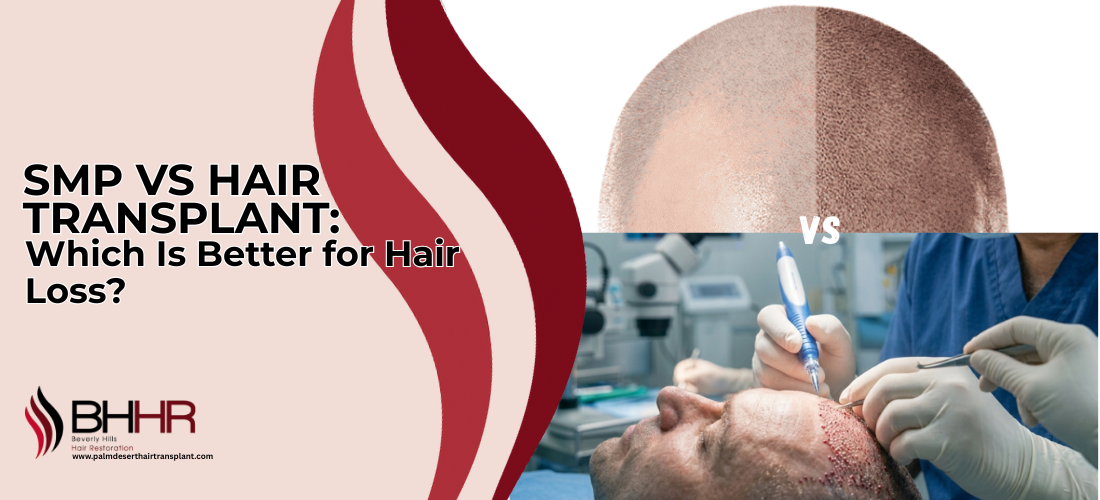
Scalp Micropigmentation (SMP) is a non-surgical hair restoration treatment that uses natural pigment to replicate the appearance of natural hair follicles. It enhances the appearance of hair density, making thinning areas look fuller. Although SMP does not stimulate new hair growth, it is an effective non-surgical hair restoration option for pattern baldness, diffuse thinning, and scalp scar camouflage.
A hair transplant is a minimally invasive procedure that restores natural hair growth by relocating healthy hair follicles from a donor area to thinning or bald regions. Techniques such as FUE and FUT allow precise follicle placement for natural hair appearance . Once the transplanted follicles heal, they continue growing permanently, providing a long-term solution for suitable candidates with adequate donor hair.
How Does SMP and Hair Transplant Work?
Scalp Micropigmentation (SMP) uses specialized micro-needles to apply natural pigment to the scalp, helping reduce the visibility of the scalp in thinning areas and making the hair appear fuller. The treatment improves the appearance of hair density without restoring actual hair growth. Since SMP is non-surgical, it involves minimal downtime, and most people return to their normal routine within a few days. Touch-up sessions help maintain long-lasting results.
In contrast, a hair transplant restores natural hair growth by moving healthy hair follicles from the donor area to thinning or bald regions of the scalp. Modern techniques such as FUE (Follicular Unit Extraction) and FUT (Follicular Unit Transplantation) provide balanced appearance through precise follicle placement. New hair growth typically begins within 1–3 months, with noticeable improvement over the following months and full results developing within about a year, offering a long-term solution for suitable candidates.
Major Differences Between SMP and Hair Transplant
Although both treatments address hair loss, SMP and hair transplant differ in their procedures, results, recovery, and long-term maintenance. Understanding these differences helps you choose the treatment that best suits your needs.
|
Features |
SMP |
Hair Transplant |
|
Procedure Type |
Non-surgical treatment |
Surgical Treatment |
|
Purpose |
Creates the appearance of fuller hair |
Restores natural hair growth |
|
Cost |
The overall cost depends on the treatment area, hair loss severity, and the number of sessions required. |
The overall cost depends on the treatment technique and the number of grafts required for your treatment. |
|
Result timeline |
Visible immediately after treatment sessions, with final results after healing. |
New hair growth typically begins within 1–3 months, with noticeable improvement by 6–9 months and full results in about a year |
|
Pros |
Non-surgical, quick recovery, immediate cosmetic improvement, suitable for most hair loss stages. |
Permanent hair growth, natural-looking results, can be cut, styled, and treated like natural hair. |
|
Scarring |
No surgical scars; only redness after the treatment |
FUE leaves tiny dot scars, while FUT may leave a linear donor scar |
|
Best for |
Suitable for diffuse thinning, complete baldness, scalp scar camouflage, or a shaved-head look |
Best for individuals with stable hair loss and adequate donor hair availability. |
Factors to Consider Before Choosing the Right Hair Loss Treatment
Before deciding on a hair restoration procedure, it is important to evaluate a few key considerations. Understanding these factors can help you compare your options more effectively and set realistic expectations for the treatment and its long-term results.
-
Hair Loss Cause and Pattern
Understanding the underlying cause and stage of hair loss is essential. A professional assessment can determine which treatment is most appropriate for your condition.
-
Treatment Goals:
Consider whether your priority is restoring natural hair growth, improving hair density, or creating the appearance of fuller hair. Your desired outcome plays a key role in selecting the right option.
-
Scalp and Donor Hair Condition:
The health of your scalp and the availability of healthy donor hair, when applicable, can influence which treatment is suitable and the results you can expect.
-
Recovery and Lifestyle:
Think about how much downtime you can manage and whether your daily routine allows time for recovery or follow-up care after treatment.
-
Long-Term Expectations:
Consider the longevity of the results and whether you're comfortable with any future maintenance or additional sessions that may be needed over time.
-
Professional Evaluation:
A consultation with an experienced hair restoration specialist helps assess your hair loss, discuss available options, and recommend a personalized treatment plan based on your individual needs.
SMP vs Hair Transplant: Which One Is Right for You?
The right treatment depends on your hair loss pattern, donor hair availability, lifestyle, and long-term goals. SMP is a good option for people who want a non-surgical solution to improve the appearance of thinning hair or scalp scars with minimal downtime. It creates the appearance of fuller hair but does not restore natural hair growth.
A hair transplant is more suitable for individuals with stable hair loss and healthy donor hair who want permanent, natural hair growth. Although it requires surgery and a longer recovery period, the transplanted hair continues to grow naturally and provides long-lasting results.
So, which one is right for you? If your goal is immediate cosmetic improvement without surgery, SMP may be the better choice. If you want permanent hair restoration and have enough donor hair, a hair transplant is generally the more suitable option. A professional consultation can help determine the best treatment based on your individual needs and expectations.
Why Choose Dr. John Kahen for SMP and Hair Transplant Treatment?
Choosing an experienced specialist is essential for achieving natural-looking hair restoration results. At Beverly Hills Hair Restoration in Palm Desert, Dr.John Kahen, an ISHRS member since 2007, provides personalized treatment recommendations based on each patient's hair loss pattern, donor hair quality, and restoration goals.
- Personalized Evaluation: Each patient receives a detailed assessment to determine whether SMP, a hair transplant, or a combination of both is the most suitable option.
- Modern treatment methods: Modern hair restoration methods and careful treatment planning help achieve precise, realistic outcomes, and long-lasting results.
- Patient-Centered Care: Treatment recommendations are based on individual needs and realistic expectations, ensuring every patient receives a customized approach.
- Comprehensive Follow-Up: Ongoing guidance and follow-up appointments help monitor healing, track progress, and support successful long-term outcomes.
Conclusion
Both SMP and hair transplant are effective hair restoration treatments, but they achieve different results. SMP is a suitable option for improving the appearance of hair density without surgery, while a hair transplant restores natural, permanent hair growth for eligible candidates. Understanding the benefits, limitations, recovery, and long-term outcomes of each procedure can help you make an informed treatment decision. Since every person's hair loss pattern and goals are different, an individualized evaluation is essential for choosing the most appropriate approach.
At Beverly Hills Hair Restoration in Palm Desert, Dr.John Kahen carefully evaluates each patient's hair loss pattern, donor hair availability, and treatment goals before recommending the most suitable solution. Scheduling a free consultation with Dr. John Kahen can help you better understand your options, set realistic expectations, and choose the most appropriate treatment plan.
Frequently Asked Questions
Can Both Treatments Be Combined?
Yes. In many cases, SMP and a hair transplant complement each other. SMP can increase the appearance of density after a transplant, camouflage donor-area scars, or enhance overall scalp coverage, creating more balanced and natural hair appearance.
Is SMP Better Than a Hair Transplant?
Neither treatment is universally better. SMP is ideal for individuals seeking a non-surgical cosmetic improvement, while a hair transplant is better suited for those who want permanent, natural hair growth. The best choice depends on your individual hair restoration goals.
Can Women Get SMP or Hair Transplants?
Yes. Both treatments can be effective for women experiencing hair thinning or certain types of hair loss. The most appropriate option depends on the underlying cause, the extent of hair loss, and the availability of healthy donors.
Can I shave my head after SMP or a hair transplant?
Yes. Many people choose to keep a closely shaved hairstyle after SMP. Hair transplant patients can also shave their hair once the scalp has fully healed and their provider approves.