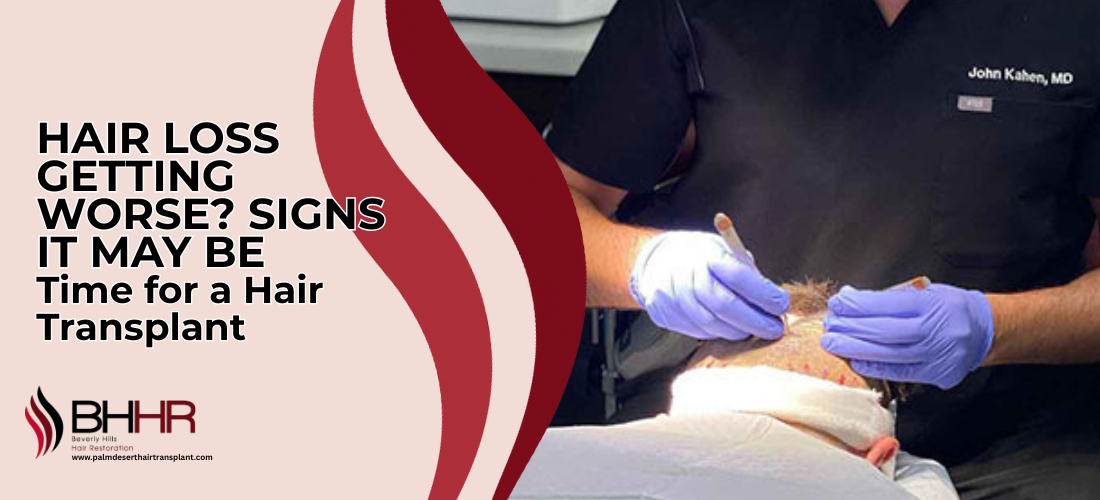
Hair Loss Getting Worse? Signs It May Be Time for a Hair Transplant
Home / Hair Transplant / Hair Loss Getting Worse? Signs It May Be Time for a Hair Transplant
Posted On : June 23, 2026 | Category : Hair Transplant | Author: Beverly Hills Hair Restoration Team
Summary
- Key signs that your hair loss may be getting worse
- When a hair transplant may be worth considering
- What makes someone a good hair transplant candidate
- Who may need other hair restoration options first
- Why donor hair, scalp health, and realistic expectations matter
- How a professional consultation helps you choose the right next step
Introduction
Hair loss can be stressful when it keeps getting worse over time. A receding hairline, thinning crown, or visible scalp may start slowly, but it can gradually affect how you look and feel about yourself. Many people try medications, topical treatments, or other non-surgical options first, but these may not always provide the improvement they want.
If your hair loss is becoming more noticeable or affecting your confidence, it may be time to explore whether a hair transplant is the right next step. This guide explains the common signs that may show it is time to explore hair restoration, what makes someone a good candidate, and why a professional consultation is important before making a decision.
Signs You're Ready to Explore Hair Restoration Options
Hair loss can be difficult to ignore when it starts affecting your looks and confidence. While every situation is different, certain signs may indicate that it is time to explore professional hair restoration options.
Your Hairline Continues to Recede
A hairline that keeps moving backward over time may be a sign of progressive hair loss that is unlikely to improve on its own.
Thinning Is Becoming More Noticeable
If your hair appears less dense and more scalp is visible, especially under bright light, hair restoration may be worth considering.
Bald Spots Are Expanding
Small thinning areas that gradually become larger can indicate ongoing hair loss progression.
When Non-Surgical Treatments Are No Longer Enough
If medications or other treatments are no longer providing noticeable improvement, it may be time to discuss additional options.
Hair Loss Is Affecting Your Confidence
When hair loss begins to impact your self-image, social interactions, or daily life, seeking professional guidance can help you understand your next steps.
What Makes You a Good Hair Transplant Candidate?
Not everyone with hair loss is a good candidate for a hair transplant. The best results are usually achieved when certain conditions are present, including a stable hair loss pattern, healthy donor hair, and realistic expectations about the outcome. A professional evaluation can help determine whether a hair transplant is the right option based on your current hair condition and long-term goals.
Stable Hair Loss Pattern
A hair transplant often works best when your hair loss follows a predictable pattern. When hair loss has become more stable, a specialist can better plan the treatment and create results that continue to look natural over time.
Scalp Health
Healthy scalp conditions play an important role in the success of a hair transplant. A scalp that is free from significant irritation, inflammation, or other concerns provides a stronger foundation for healing and healthy hair growth after the procedure.
Confidence Concerns
Many people begin considering a hair transplant when hair loss starts affecting how they feel about their appearance. If thinning hair or bald spots are impacting your confidence in social, personal, or professional situations, exploring restoration options may be worthwhile.
Healthy Donor Hair
A successful hair transplant depends on having a sufficient supply of healthy donor hair. Strong hair follicles from the back and sides of the scalp are used to restore thinning areas and help achieve natural-looking coverage and density.
Who May Not Be a Good Hair Transplant Candidate?
A hair transplant is not the right solution for everyone. Before recommending treatment, specialists evaluate factors such as hair loss stage, scalp health, donor hair availability, and overall expectations.
You Are in the Early Stages of Hair Loss
If your hair loss pattern is still changing, a specialist may recommend monitoring or non-surgical treatments before considering a hair transplant.
You Have an Active Scalp or Hair Condition
Certain scalp conditions may need to be treated first to create a healthier environment for hair restoration.
You Don't Have Enough Donor Hair Available
Successful hair transplants depend on healthy donor hair, typically from the back and sides of the scalp. Limited donor hair can affect treatment options.
Your Expectations May Not Match Realistic Results
A hair transplant can improve hair density and coverage, but understanding realistic outcomes is important for long-term satisfaction.
Why Patients Trust Beverly Hills Hair Restoration in Palm Desert
At Beverly Hills Hair Restoration in Palm Desert, patients benefit from the experience and leadership of Dr. John Kahen, who has spent years helping patients address different stages of hair loss through surgical and non-surgical restoration options. His experience allows treatment recommendations to be based on individual hair loss patterns, donor hair quality, and long-term restoration planning.
The clinic is also known for its personalized approach to hair restoration. Rather than offering the same solution to every patient, treatment plans are customized based on individual needs, hair loss progression, and future hair restoration goals. Whether someone is considering a hair transplant or a non-surgical treatment, the focus remains on providing honest guidance, natural-looking results, and long-term hair restoration solutions. Patients also appreciate the consultation-focused experience and ongoing support throughout their hair restoration journey.
Conclusion
Hair loss can progress gradually, making it easy to overlook the warning signs until thinning, a receding hairline, or expanding bald spots become more noticeable. If your hair loss continues despite using medications, topical treatments, or other hair restoration approaches, non-surgical treatments are no longer providing the desired results, or your confidence is being affected, it may be time to explore your hair restoration options.
A professional evaluation is one of the best ways to understand the cause and stage of your hair loss. Since every patient has unique goals, hair characteristics, and donor hair availability, personalized treatment planning plays an important role in achieving natural-looking, long-term results. If you're concerned about worsening hair loss, scheduling a free consultation with the experienced specialists at Beverly Hills Hair Restoration in Palm Desert can help you determine the most appropriate path forward for your hair restoration journey.
Faqs
What is the best age for a hair transplant?
There is no single best age for a hair transplant. The ideal time depends on factors such as your hair loss pattern, donor hair availability, and how stable your hair loss has become. A consultation with a hair restoration specialist can help determine whether the timing is right for your individual situation.
How much hair loss is needed before considering a transplant?
There is no specific amount of hair loss required before considering a hair transplant. The decision is usually based on factors such as your hair loss pattern, donor hair availability, and treatment goals rather than the percentage of hair loss. A consultation can help determine whether a hair transplant is appropriate for your stage of hair loss.
How do I choose the right hair restoration option?
The right hair restoration option depends on factors such as your hair loss stage, scalp health, donor hair availability, and long-term goals. A consultation with a hair restoration specialist can help determine whether a hair transplant, non-surgical treatment, or a combination approach is most appropriate for your needs.
Can I get a hair transplant if my hair loss is still progressing?
Possibly, but it depends on how quickly your hair loss is progressing and your overall hair restoration goals. A specialist will evaluate your hair loss pattern, donor hair, and future risk of hair loss to determine whether a hair transplant is appropriate now or if another treatment should be considered first.