Hair Transplant Gone Wrong: Causes, Signs, and How to Fix It
Home / Hair Transplant / Hair Transplant Gone Wrong: Causes, Signs, and How to Fix It
Posted On : April 25, 2026 | Category : Hair Transplant | Author: Beverly Hills Hair Restoration Team
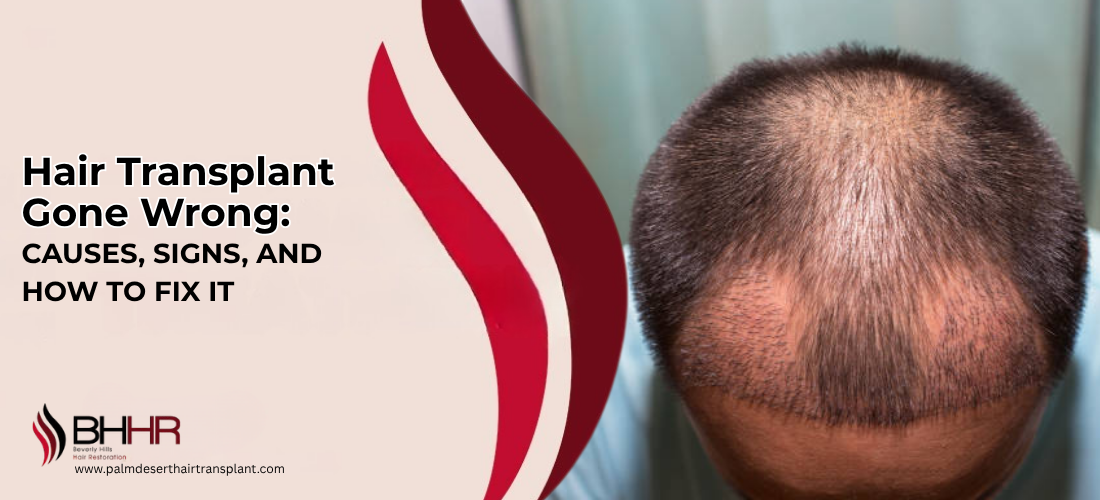
Hair transplants have emerged as a popular solution for people experiencing hair loss, or balding, offering the possibility of natural-looking and long-lasting results. When done correctly by skilled specialists, the procedure can restore hair density and improve overall confidence. However, like any medical treatment, outcomes may vary, and in some cases, patients may feel that their results did not turn out as expected.
A hair transplant gone wrong can involve issues such as an unnatural hairline, uneven growth, or noticeable scarring. Understanding why these problems happen, recognizing the early signs, and knowing what options are available to correct them can help patients make informed decisions. In this guide, we’ll explore the common causes, warning signs, and potential solutions for improving unsatisfactory hair transplant results.
Common Causes of a Hair Transplant Gone Wrong
While hair transplant procedures today can lead to satisfactory and natural-looking results, some mistakes made during the planning or actual procedure can cause disappointing outcomes. In most instances, hair transplant failure can be attributed to technical, planning, and experience-related mistakes. Understanding what leads to hair transplant failure can, however, help patients avoid possible problems and choose the right specialist for the job.
Inexperienced Surgeon
One of the most common reasons for bad hair transplant results is a lack of experience. Hair transplantation requires precision, artistic planning, and technical expertise. If the procedure is performed by someone without sufficient training or experience, it may result in unnatural placement, poor density, or uneven growth.
Poor Hairline Design
The hairline plays a major role in how natural the final result appears. If it is designed too straight, too low, or without considering facial proportions, the outcome may look artificial. A well-planned hairline should blend naturally with the patient’s features and age.
Overharvesting of the Donor Area
The donor area, usually located at the back or sides of the scalp, provides the hair follicles used for transplantation. Removing too many grafts from this area can leave it looking thin or patchy, which may become noticeable, especially when the hair is cut short.
Low Graft Survival Rate
For a transplant to be successful, the implanted hair follicles must survive and grow properly. Poor handling of grafts, prolonged time outside the body, or inadequate surgical technique can reduce graft survival, leading to weak or uneven hair growth.
Improper Implantation Angle
Hair naturally grows at specific angles and directions. If grafts are implanted at the wrong angle or direction, the hair may grow in an unnatural pattern. This can make styling difficult and cause the transplant to look less natural.
Signs of a Bad Hair Transplant
It usually takes several months for the final results of a hair transplant to appear. While some temporary shedding or uneven growth can be normal during recovery, certain warning signs may indicate a hair transplant gone wrong. Recognizing these signs early can help patients seek professional advice and explore corrective options if needed.
Patchy Hair Growth
Uneven or patchy hair growth in the transplanted area can indicate that some grafts did not survive or grow properly. This can lead to visible gaps in coverage and may cause patients to feel their hair transplant has gone wrong.
Visible Scarring
Although modern techniques aim to reduce scarring, noticeable scars in the donor or transplant area may occur if the procedure is not performed correctly. Visible scarring can be another indicator of a failed hair transplant, especially when the hair is worn short.
Pluggy Hair Appearance
In some poorly performed procedures, hair may grow in small clusters instead of a natural pattern. This “pluggy” look can make the transplant obvious and unnatural, often leading patients to believe their bad hair transplant.
Low-Density Results
If the transplanted area still appears thin or lacks fullness even after the expected growth period, it may indicate low graft survival or insufficient graft placement. Low density is another common sign that a hair transplant may have gone wrong.
Real Examples of Hair Transplant Gone Wrong
Comedian and podcast host Theo Von has openly discussed his hair restoration journey, which included an early procedure that did not fully meet expectations. In 2017, he underwent a hair transplant to address hair thinning and improve his hairline. However, the results did not appear as natural or dense as expected, which is a situation some patients describe as a hair transplant gone wrong. The outcome lacked the desired fullness and natural appearance, leading him to look for a better solution.
In 2019, Theo Von decided to undergo a corrective procedure with palm desert Beverly Hills Hair Restoration. During this treatment, the clinic used the FUE (Follicular Unit Extraction) method, a modern technique that involves extracting individual hair follicles from the donor area and implanting them carefully into thinning areas. The procedure focused on improving hair density and creating a more natural hairline. The results appeared fuller and more natural, showing that even if a hair transplant gone wrong happens initially, a properly planned corrective treatment can significantly improve the final outcome.
Can a Bad Hair Transplant Be Fixed?
Experiencing unsatisfactory results after a procedure can be frustrating, but in many cases the situation can be improved. But when a hair transplant fails and results in problems such as an unnatural hairline, lack of density, or scarring, there may be various corrective procedures that can be used to restore a natural look. The best corrective procedure would depend on the condition of the donor site, the scalp, and the nature of the correction required.
Smart FUE (Follicular Unit Extraction)
Smart FUE (Follicular Unit Extraction) is one of the most popular techniques used to correct a failed hair transplant. In this technique, hair follicles are taken out one by one and placed in areas that have become bald or have not been transplanted correctly. FUE helps to rebuild the hairline, increase hair density, and correct improper hair placement with minimum scarring.
Smart FUT (Follicular Unit Transplantation)
Smart FUT (Follicular Unit Transplantation) is another surgical method that can help improve results after a wrong hair transplant. This technique involves removing a small strip of scalp from the donor area, from which healthy hair follicles are then separated and transplanted into areas that need correction. FUT can be useful when a larger number of grafts are required to restore density.
Smart PRP Therapy
Smart PRP (Platelet-Rich Plasma) therapy is a non-surgical treatment that uses the patient’s own blood plasma to support hair growth. It may help strengthen existing hair, improve scalp health, and support the growth of transplanted follicles, especially when hair appears thin after a hair transplant.
How Dr.John Kahen Repair Failed Hair Transplants
In situations where hair transplantation has not gone well and patients have unnatural hairlines, hair density, or scars, a detailed and individualized correction technique is required. Hair restoration expertDr. John Kahen, at Beverly Hills Hair Restoration in Palm Desert , ensures that patients receive the best by evaluating their past hair restoration procedure and using advanced techniques such as Smart FUE and FUT to enhance their results. His aim is to create a natural hairline for his patients and maintain their remaining hair.
Evaluation
The repair process begins with a detailed evaluation of the patient’s scalp and previous transplant work. Dr. John Kahen carefully examines hair growth patterns, graft placement, and the condition of the scalp to understand what caused the hair transplant gone wrong and to plan the most suitable corrective approach.
Donor Area Assessment
A thorough assessment of the donor area is the next step. Dr. Kahen evaluates how many healthy follicles remain and determines whether Smart FUE or FUT would provide the best results for the repair procedure. Protecting the donor area is crucial to achieving balanced and natural-looking outcomes.
Hairline Redesign
If the previous hairline appears unnatural or poorly positioned, Dr. Kahen may redesign it to better match the patient’s facial structure and age. A carefully planned hairline helps correct visible issues from a hair transplant gone wrong and improves the overall appearance.
Repair Surgery
Once the plan is finalized, the repair procedure is performed using Smart FUE or FUT techniques. Healthy grafts are strategically transplanted to improve density, correct hair direction, and create a more natural look. With the right technique and planning, many patients can successfully improve the results of a hair transplant gone wrong.
How to Avoid a Bad Hair Transplant
While modern procedures can provide natural and long-lasting results, careful planning is essential to reduce the risk of a hair transplant gone wrong. Choosing the right clinic and knowing the procedure can help make a significant difference in the final outcome.
Choose Experienced Surgeons
One of the most important steps is selecting a qualified and experienced hair restoration surgeon. Skilled specialists understand proper graft placement, hairline design, and advanced techniques, which greatly reduces the chances of a hair transplant gone wrong.
Check Before and After Results
Reviewing real patient before-and-after photos can give you a better idea of the clinic’s work and the quality of their results. Consistent, natural-looking outcomes are a strong indicator that the clinic has experience in performing successful procedures.
Verify Clinic Technology
Advanced techniques and modern equipment play a key role in achieving natural results. Clinics that use updated methods and technology are generally better equipped to perform precise procedures and minimize complications.
Avoid Cheap Clinics
Selecting a clinic solely on the basis of low cost can raise the risks of adverse outcomes. Procedures that are too cheap can include unqualified practitioners and outdated methods, which can raise the risks of a failed hair transplant. Spending money on a reputable clinic can result in safer procedures and better outcomes.
Conclusion
A failed hair transplant can be very frustrating, and it can even impact one’s appearance and self-confidence. Problems such as unnatural hairlines, patchy growth, and scarring may occur due to improper planning and execution of a hair transplant surgery. It is, however, very important to understand and know the warning signs and common causes of a failed hair transplant surgery in order to make informed decisions about it.
The good news is that many unsatisfactory results can often be improved with the help of experienced specialists and advanced techniques. If you are concerned about your results or want expert guidance, Call us at 760.501.0080 to book a free consultation with a qualified hair restoration specialist can help you understand your options and plan the right solution for achieving natural-looking results.
FAQs
What happens if a hair transplant goes wrong?
When a hair transplant goes wrong, the results may appear unnatural, with issues like uneven hair growth, low density, or a poorly designed hairline. In many cases, these problems can be improved with corrective treatments by an experienced specialist.
Can a bad hair transplant be fixed?
Yes, in many cases a bad result can be improved. Specialists can correct a bad hair transplant using repair procedures, advanced techniques like Smart FUE or Smart FUT, or supportive treatments to improve hair density and create a more natural appearance.
How to make the donor area strong for hair transplant?
To keep the donor area healthy, it’s important to maintain good scalp care, follow a balanced diet, and avoid excessive stress or damage to the hair. Doctors may also recommend treatments like PRP therapy or medications to strengthen hair before a transplant.
How can I heal my donor area fast?
To help the donor area heal faster, follow your doctor’s aftercare instructions, keep the scalp clean, avoid scratching or touching the area, and take prescribed medications. Proper rest and a healthy diet can also support quicker healing.
Can I sleep on the donor area after hair transplant?
It’s usually recommended to avoid sleeping directly on the donor area for the first few days after the procedure. Doctors often advise sleeping with your head slightly elevated or on your back to protect the scalp and support proper healing.