Crown Hair Transplant: Methods, Recovery, and Results
Home / Hair Transplant / Crown Hair Transplant: Methods, Recovery, and Results
Posted On : May 30, 2026 | Category : Hair Transplant | Author: Beverly Hills Hair Restoration Team
Summary
- A crown hair transplant helps improve hair growth in the back of the scalp, where thinning and bald spots often appear.
- Crown area hair loss usually appears at the top-back of the head and may gradually expand over time if left untreated.
- FUE and FUT are the two commonly used techniques in these procedures.
- The number of grafts needed for a thinning crown depends on the size of the bald area, existing hair density, and hair characteristics.
- Hair growth after this transplant takes time, and full results may continue improving over several months.
Introduction
Many people do not notice crown hair loss until it becomes difficult to hide in photos, bright lighting, or from certain angles. What may start as mild thinning can gradually turn into a more visible bald spot over time, leaving many patients wondering whether a crown hair transplant can actually restore natural-looking density and how long the results may take to appear.
Because the crown area has unique hair growth patterns, restoring this region often requires careful planning and the right surgical approach. Understanding the available methods, recovery process, and realistic results can help patients make more informed decisions before treatment.
In this guide, we’ll cover what patients should know about crown hair restorations, including treatment options, healing expectations, and factors that can influence final results.
What Is a Crown Hair Transplant?
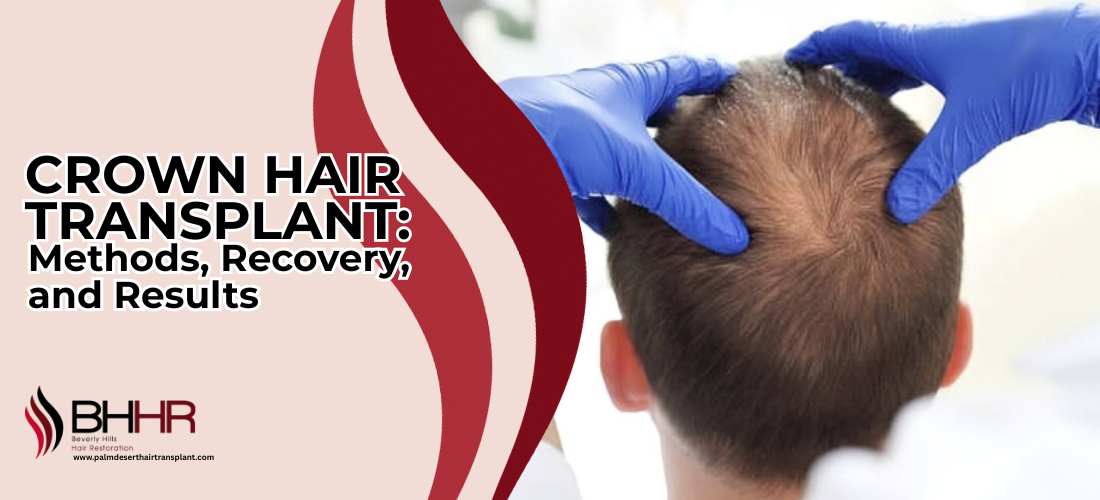
A Crown Hair Transplant is a hair restoration procedure designed to improve hair growth in the crown area, also called the vertex, located at the back of the scalp. This area often develops visible thinning or bald spots due to progressive vertex hair loss .
During a Hair Transplant on the Crown, healthy hair follicles are taken from the donor area and carefully implanted into the thinning crown region. Since crown hair naturally grows in a circular pattern, proper angle and graft placement are important for natural-looking results.
This hair transplant may help improve scalp coverage, density, and overall appearance when performed on suitable candidates with stable hair loss and sufficient donor hair.
Methods of Crown Hair Transplant
FUE (Follicular Unit Extraction)
Follicular Unit Extraction (FUE) is one of the most commonly used methods for a Crown Hair Transplant. In this technique, individual hair follicles are removed from the donor area and implanted into the crown hair region. FUE leaves tiny dot-like scars and may offer faster healing for many patients. It is often preferred for crown thinning cases that require precise graft placement and natural density.
FUT (Follicular Unit Transplantation)
Follicular Unit Transplantation (FUT) involves removing a strip of scalp from the donor area to collect hair grafts. This method may provide a larger number of grafts in a single session for advanced crown hair loss. FUT can be considered when patients need extensive coverage in the hair crown area.
Learn more here: FUE vs FUT Hair Transplant: Differences, Pros and Cons
How Many Grafts Are Needed for a Crown Hair Transplant?
The number of grafts needed for a Crown Hair Restoration depends on the size of the bald area, existing hair density, hair texture, and the severity of crown thinning. The crown area often requires careful planning because the hair crown grows in a spiral pattern, which can affect graft distribution and coverage.
Here is a general estimate:
- Mild crown hair thinning: 800–1,200 grafts
- Moderate crown hair loss: 1,500–2,500 grafts
- Advanced crown thinning cases: 2,500–3,500+ grafts
Patients with larger bald spots may require more than one session for balanced density and natural-looking results. A detailed scalp evaluation helps determine the right graft count for Crown Hair Restoration procedures.
Crown Hair Transplant Recovery Timeline
First 1–7 Days
Mild redness, swelling, and small scabs around the crown hair area are common after a Hair Transplant on the Crown. Patients are usually advised to avoid scratching, heavy exercise, and direct sun exposure during early healing.
Weeks 2–6
Some transplanted crown hair may shed temporarily, which is a normal part of the recovery process. The scalp gradually continues healing during this stage.
Months 3–6
New hair growth often starts becoming visible in the hair crown region. Early growth may appear thin before improving in density over time.
Months 9–12
Most patients notice fuller results as the hair transplant continues maturing. Final density and texture may keep improving beyond one year in some cases.
How to Improve Crown Hair Transplant Results
Following proper aftercare instructions after a Hair Transplant on the Crown plays an important role in healing and graft survival. Patients are usually advised to avoid scratching the scalp, touching the grafts, or exposing the hair crown area to direct sunlight during the early recovery period.
Smoking, alcohol, and intense physical activity may affect blood circulation and healing after a crown hair restoration. Avoiding these activities for the recommended recovery period may help support healthier crown hair growth and improve overall scalp recovery.
Using recommended hair products, medications, and maintaining a nutrient-rich diet can also support healthy hair restoration. Regular follow-up appointments allow the specialist to monitor vertex hair loss recovery and evaluate long-term growth progress over time.
Why Patients Trust Beverly Hills Hair Restoration for Crown Hair Transplant
Crown hair restoration requires experience because the hair crown area grows in a spiral pattern that can make natural density and direction more difficult to recreate. At Beverly Hills Hair Restoration, each Hair Transplant is planned carefully based on the patient’s pattern of crown hair loss, donor hair quality, scalp condition, and long-term goals.
Patients choose the clinic for its personalized consultations, advanced FUE and FUT techniques, and realistic treatment approach. The team focuses on creating balanced, natural-looking crown hair transplant results while providing ongoing guidance throughout recovery and long-term hair restoration planning.
Final Thoughts
A Hair Transplant may help improve density and scalp coverage for patients experiencing crown hair loss or thinning in the hair crown area. Since crown restoration often requires precise graft placement and long-term planning, choosing an experienced clinic plays an important role in achieving natural-looking results.
Patients considering a crown hair restoration should understand that results develop gradually over time and depend on factors such as donor hair quality, healing response, and the extent of thinning. Beverly Hills Hair Restoration in Palm Desert provides personalized evaluations to help patients understand suitable treatment options, graft planning, recovery expectations, and long-term crown hair restoration goals.
FAQs
Who is an ideal candidate for a crown hair transplant?
Patients with stable crown hair loss, healthy donor hair, and realistic expectations are often considered suitable candidates for a Crown Hair Restoration. A consultation helps determine whether the hair crown area can achieve natural-looking coverage based on donor hair availability and the extent of thinning.
Is a Crown Hair Transplant Successful?
Hair transplants can be successful for many patients when performed with proper planning, healthy donor hair, and realistic expectations. Since the hair crown area has a unique growth pattern, natural-looking results often depend on graft placement, scalp condition, and the extent of crown hair loss.
How Long Does It Take for a Crown Hair Transplant to Grow?
Most patients start noticing early growth after a Hair Transplant on the Crown within 3 to 6 months. The hair crown area usually takes longer to mature, and fuller crown hair results often continue improving between 9 and 12 months after the procedure.
Does a Crown Hair Transplant Work?
It may help in restoring hair growth and improving density in the hair crown area for suitable candidates. Results often depend on factors such as donor hair quality, the severity of vertex hair loss, graft placement, and long-term hair restoration planning.