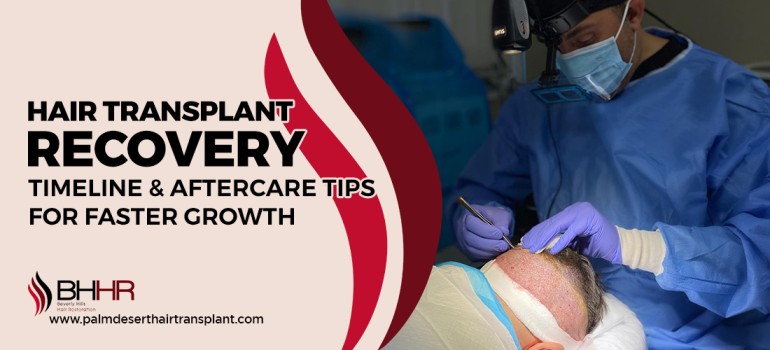
Hair Transplant Recovery Timeline & Aftercare Tips for Faster Growth
Home / Hair Transplant / Hair Transplant Recovery Timeline & Aftercare Tips for Faster Growth
Updated On : August 17, 2026 | Category : Hair Transplant | Author: Beverly Hills Hair Restoration Team
Quick Answer
A hair transplant does not produce immediate results, but the initial recovery period is usually short. Most patients heal within 10 to 14 days, while new hair often starts growing after 3 to 4 months. Greater density usually becomes visible between 6 and 9 months, with the complete outcome developing around 12 months. Recovery may differ based on the procedure, scalp condition, health, and post-treatment care.
Introduction
Hair transplant results do not appear immediately after the procedure. The scalp needs time to heal, the transplanted grafts need to settle, and new hair growth develops gradually over the following months.
During this time, the scalp may go through temporary changes as the treated area begins to recover. For many patients, this phase can bring questions about what to expect, what activities to avoid, and how to care for the scalp without disturbing the newly placed follicles.
Understanding the recovery process can make the experience feel more manageable and help you follow your surgeon’s instructions with greater confidence. In this guide, we’ll explain the hair transplant recovery timeline and share practical aftercare tips that can support proper healing and healthier hair growth after your procedure.
What Is Normal During Hair Transplant Recovery?
Some redness, swelling, itching, and scabbing are expected during the early healing period. However, certain symptoms may indicate that the scalp is not healing properly and should be checked by your surgeon.
|
Normal Recovery Signs |
Contact Your Surgeon If You Notice |
|
Mild swelling around the scalp or forehead |
Fever or chills |
|
Small scabs around the transplanted grafts |
Pus or unusual discharge |
|
Mild itching as the scalp heals |
Severe or worsening pain |
|
Temporary redness in the treated area |
Redness that continues to spread or increase |
|
Temporary shedding, also called shock loss |
Persistent or heavy bleeding |
|
Mild tightness or tenderness |
An unpleasant odor from the treated area |
Most mild symptoms improve gradually during the first one to two weeks. Avoid scratching, picking scabs, or applying unapproved products to the scalp. Contact your hair transplant surgeon if symptoms become more intense, do not improve, or cause concern.
How Long Does Hair Transplant Recovery Take?
How long is hair transplant recovery? While it varies by person, the hair transplant recovery timeline typically follows a clear, exciting path toward fuller, healthier hair. Here’s what you can expect during recovery.
-
Day 1–7: Crusting, Sensitivity, Initial Healing
During the first week, your scalp may feel tender, swollen, or slightly red. Tiny scabs will form around the grafts—this is entirely normal. Avoid touching the area, and follow our hair transplant surgeon post-op instructions carefully. Whether it’s a male or female hair transplant recovery, this stage concerns rest and protection.
-
Week 2–4: Shedding Phase, Scab Removal
Don’t panic if the newly implanted hairs begin to shed—this is called "shock loss" and is a temporary phase. Scabs will naturally fall off, revealing the healing skin underneath. The hair transplant recovery time here is marked by patience.
-
1–6 Months: Regrowth Begins, Texture Changes
This is where things get exciting. Fine “baby hairs” grow, often with a softer texture. Over time, these strands will thicken and look more natural. Female hair transplant recovery can bring visible improvements for women around months 4–6, especially in hairline areas.
-
6+ Months: Final Results and Hair Maturity
From six months onward, hair density improves, and the transplanted follicles settle into their final growth pattern. By month 12, most patients see their complete, natural, permanent, and life-changing results.
Signs Your Hair Transplant Is Healing Properly
After a hair transplant, the scalp needs time to recover and adjust. Some changes during the healing period are completely normal and can indicate that your recovery is progressing well. Common signs of proper healing include:
-
Scabs Falling Naturally:
Small scabs may form around the transplanted area during the first few days. As the scalp heals, these scabs usually loosen and fall away naturally. Avoid picking them, as this can disturb the healing grafts. -
Swelling Decreasing:
Mild swelling around the forehead or scalp can occur after the procedure. It should gradually reduce as your body continues the healing process. -
Less Redness Over Time:
Some redness in the treated area is expected after a hair transplant. A gradual reduction in redness is a positive sign that the scalp is recovering. -
Temporary Shedding:
Transplanted hairs may shed a few weeks after the procedure. This is a normal part of the hair growth cycle and does not mean the transplanted follicles are lost. -
Tiny New Hairs Appearing:
Small new hairs may begin to appear as the transplanted follicles enter the growth phase. These hairs often become thicker and more noticeable over time. -
No Signs of Infection:
Normal healing should not involve increasing pain, worsening swelling, unusual discharge, or spreading redness. If you notice these symptoms, contact your provider for guidance.
Following your provider’s aftercare instructions and attending recommended follow-up visits can help support healthy healing and protect your hair transplant results.
Factors That Can Affect Hair Transplant Recovery Time
Every person’s healing process after a hair transplant can be different. While most patients follow a similar recovery timeline, certain factors can influence how quickly the scalp heals and when visible changes begin.
-
Number of Grafts Transplanted: The number of hair grafts placed during the procedure can affect the healing period. A larger number of grafts may require additional time for the scalp to fully recover.
-
Type of Hair Transplant Procedure: Recovery can vary depending on the technique used. FUE and FUT procedures involve different extraction and placement methods, which can impact the healing experience.
-
Individual Healing Ability: Each person’s body responds differently after treatment. Natural healing speed, skin response, and overall health can influence recovery time.
-
Scalp Condition: The health and condition of your scalp before the procedure can play a role in how smoothly the recovery progresses.
-
Following Post-Treatment Instructions: Proper aftercare is important for protecting newly placed grafts and supporting the healing process. Following your provider’s guidance can help encourage a smoother recovery.
Hair Transplant Aftercare Tips
Following proper care instructions after a hair transplant can help support healing and protect the newly placed grafts. The table below highlights important practices to follow and things to avoid during the recovery period.
|
Recommended Practices |
Things to Avoid |
|
Follow your provider’s aftercare instructions carefully |
Avoid scratching or rubbing the scalp |
|
Keep the scalp clean as advised by your provider |
Do not pick or remove scabs forcefully |
|
Sleep with your head slightly elevated during the initial recovery period |
Avoid putting pressure on the transplanted area |
|
Attend scheduled follow-up appointments to monitor healing |
Avoid heavy exercise during the early healing stage |
|
Be gentle while washing and caring for your scalp |
Avoid activities that may irritate or disturb the grafts |
Why Trust Beverly Hills Hair Restoration for Your Hair Transplant Journey?
Choosing an experienced hair restoration provider plays an important role in achieving natural-looking results and a smooth recovery process. At Beverly Hills Hair Restoration, patients receive personalized care focused on their hair loss concerns, restoration goals, and long-term results.
-
Experienced Hair Restoration Specialist: Dr. John Kahen, M.D., an ISHRS member since 2007, personally performs hair restoration procedures and brings years of experience supported by thousands of successful cases.
-
Personalized Treatment Planning: Each patient receives an individualized approach based on their hair pattern, scalp condition, hairline goals, and overall appearance.
-
Advanced Hair Restoration Techniques: The clinic uses modern hair restoration methods, including advanced FUE techniques, to help create natural-looking hairline design and balanced results.
-
Natural Hairline Design Approach: Careful planning of hairline placement, angle, and density helps create results that complement each patient’s facial features and existing hair.
-
Personalized Aftercare Support: Patients receive detailed recovery guidance and follow-up care to help monitor healing, protect grafts, and support the hair restoration process.
Conclusion
A successful hair transplant journey does not end after the procedure. The recovery phase plays an important role in allowing the scalp to heal and supporting the natural growth process. Early changes such as redness, scabbing, and temporary shedding are normal parts of recovery and usually improve as the transplanted follicles adjust.
Proper aftercare and professional guidance can make a meaningful difference during the healing process. With personalized support from Dr. John Kahen, M.D., and the team at Beverly Hills Hair Restoration, patients can better understand each recovery stage and take the right steps toward their hair restoration goals. Schedule a free consultation today to discuss your concerns and explore a personalized treatment plan.
FAQs
How can I support hair growth after a hair transplant?
Following your provider’s aftercare instructions, maintaining proper scalp care, and attending recommended follow-up visits can help support the natural hair growth process after a transplant.
Is the donor area still sore after a hair transplant?
Mild soreness, tenderness, or tightness in the donor area can be normal after a hair transplant. These sensations usually improve as the scalp continues to heal during the recovery period.
Can I wash my hair normally after a hair transplant?
You should wash your hair according to your provider’s instructions. Gentle washing methods are usually recommended during the early recovery stage to help protect the transplanted grafts.
When will I see visible results after a hair transplant?
Visible results usually develop gradually as new hair growth begins. Many patients start noticing changes within a few months, with continued improvement in thickness and density over time.