What is FUT Hair Transplant: A Comprehensive Overview
Home / FUT Hair Transplant / What is FUT Hair Transplant: A Comprehensive Overview
Updated On : November 05, 2026 | Category : FUT Hair Transplant | Author: Beverly Hills Hair Restoration Team
Quick Answer
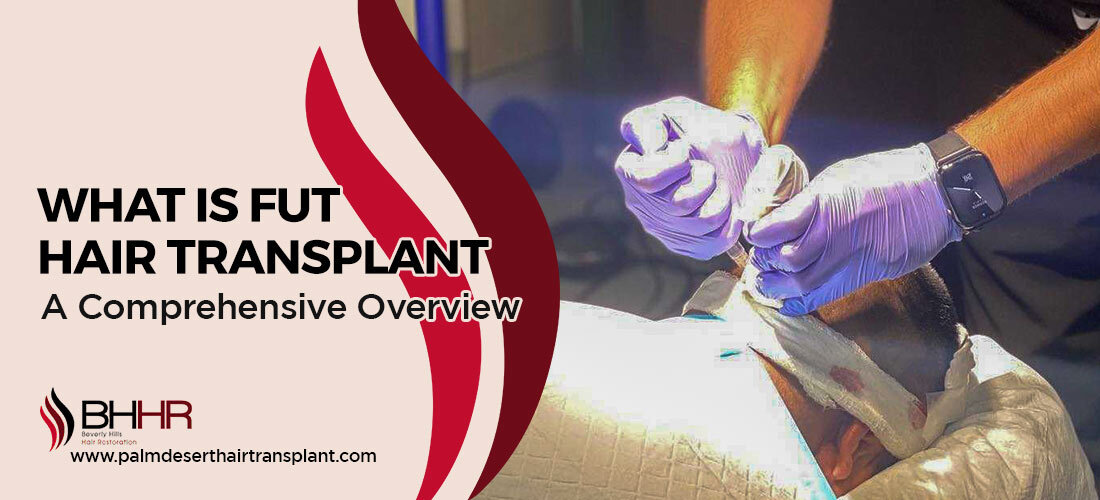
A FUT hair transplant is a procedure that moves healthy hair from the back or sides of the scalp to areas with thinning or missing hair. The surgeon removes a thin strip of skin containing healthy hair, separates it into small hair groups, and places them in the treatment area. FUT can collect many hair grafts in one session, making it a possible choice for people who need more scalp coverage.
Introduction
If your hair is becoming thinner and more of your scalp is starting to show, you may be looking for a treatment that can provide wider coverage in one session. FUT hair transplant is an established method that uses healthy hair from the donor area to fill parts of the scalp affected by hair loss. But how is the donor hair collected, does the procedure leave a visible scar, and when can you expect new growth.
Understanding these details can help you decide whether FUT matches your hair restoration needs. The procedure involves removing a thin strip of hair bearing skin, preparing it into individual grafts, and placing those grafts in areas that need coverage. In this guide, you will learn how FUT works, who may be a suitable candidate, what happens during the procedure, how recovery progresses, and which factors can influence the final outcome.
What is FUT Hair Transplant
Are you curious about FUT Hair Transplant? Uncover the answer to 'What is FUT Hair Transplant' and discover the transformative benefits. This process involves the removal of a strip of hair-bearing skin from the donor area, generally the back of the scalp, which is then meticulously dissected into individual hair units under a microscope. These units are then transplanted into the recipient site, where hair is thinning or balding. FUT hair transplant provides many grafts in a single session, making it an ideal solution for those with significant hair loss.
FUT Hair Transplant Procedure
The Follicular Unit Transplantation (FUT) technique, offered at Beverly Hills Hair Restoration in Palm Desert, is a popular and effective hair restoration method. The process involved is:
- Donor Hair Harvesting: The process starts with local anesthesia; a section of hair-bearing skin is surgically extracted from the donor area. The incision is then carefully closed, leaving a linear scar generally concealed by the surrounding hair.
- Follicular Unit Preparation: The harvested strip is divided into individual follicular units using microscopic dissection techniques, ensuring minimal damage to the hair follicles.
- Recipient Site Creation: Small incisions are made to prepare for graft insertion where hair loss has occurred in the recipient area. These incisions are strategically placed to mimic natural hair growth patterns.
- Graft Insertion: The prepared follicular units are carefully inserted into the recipient sites. The placement and angle of each graft are crucial for achieving a natural-looking result.
Who May Be a Suitable Candidate for FUT Hair Transplant?
FUT hair transplant may be suitable for people experiencing hair loss who have enough healthy donor hair. It may be considered when more grafts are needed to cover thinning or bald areas.
Potential candidates may have:
- Healthy Donor Hair: Enough hair available for transplantation.
- Good Scalp Flexibility: Sufficient flexibility for strip removal.
- Established Hair Loss: A clear pattern of hair thinning.
- Realistic Expectations: An understanding that results vary and take time.
- Good General Health: No major health concerns affecting healing.
A surgeon will assess your scalp, medical history, and hair restoration goals before recommending FUT.
Duration and Recovery Time
The duration of a FUT hair transplant procedure differs depending on the number of grafts being transplanted, typically ranging from 4 to 8 hours. Recovery time is generally short, with most patients able to return to normal activities within a few days. The transplanted hair will grow within a few months, with full results visible after 9 to 12 months.
When Does Hair Start Growing After FUT?
New hair does not grow immediately after a FUT procedure. The transplanted follicles need time to heal and enter a new growth cycle. Some of the transplanted hairs may first shed during the weeks following treatment. Early growth may begin around three to four months. More visible changes often appear between six and nine months. Fuller growth may be assessed around 12 months, while hair thickness and texture may continue improving for up to 18 months. The timeline can be influenced by donor quality, hair characteristics, the treatment area, graft handling, general health, and aftercare. Follow up appointments allow the surgeon to review healing and monitor the progress of new growth.
What Factors Can Affect FUT Results?
FUT results can differ between patients because several factors influence growth, coverage, and the final appearance.
- Donor hair quality: Healthy and stable follicles are important for transplantation.
- Available grafts: Donor density affects how much coverage may be possible.
- Hair characteristics: Thickness, curl, texture, and color can change how dense the hair appears.
- Hairline planning: The planned shape should match the patient’s face, age, existing hair, and possible future loss.
- Graft preparation: Careful handling helps protect the follicles before placement.
- Graft placement: Angle, direction, and spacing influence how the new hair looks.
- Healing response: Recovery speed and scar appearance vary between patients.
- Aftercare: Following washing, sleeping, medication, and activity instructions supports healing.
- Future hair loss: Hair outside the transplanted area may continue to become thinner.
A treatment plan should consider both present hair loss and possible future changes.
Why Choose Beverly Hills Hair Restoration for FUT?
A FUT hair transplant requires careful planning, accurate graft placement, and proper donor area management. At Beverly Hills Hair Restoration in Palm Desert, Dr. John Kahen evaluates each patient’s hair loss and donor hair before developing a treatment plan. Patients also receive clear guidance about the procedure, recovery, scar, and expected growth.
- Personalized evaluation: The treatment plan is based on the patient’s hair loss pattern, donor density, scalp condition, and goals.
- Careful graft planning: The number, position, direction, and spacing of grafts are planned to support natural looking growth.
- Donor area management: Attention is given to strip removal, incision closure, and the expected location of the linear scar.
- Clear recovery guidance: Patients receive instructions for scalp care, washing, sleeping, medication, and physical activity.
- Realistic expectations: The expected coverage, growth timeline, limitations, and possible risks are discussed before treatment.
Final Thoughts
A FUT hair transplant moves healthy follicles from a donor strip to areas affected by thinning or hair loss. It may be considered when a patient needs a larger number of grafts and has enough healthy donor hair. However, FUT also creates a linear donor scar and requires time for healing and new growth.
At Beverly Hills Hair Restoration in Palm Desert, Dr. John Kahen evaluates the pattern of hair loss, donor density, scalp flexibility, medical history, and long term goals before recommending treatment.
Schedule a free hair transplant consultation to learn whether FUT hair transplant may be suitable for your needs. Call 760.501.0080 to speak with Beverly Hills Hair Restoration in Palm Desert.
FAQS
Is a FUT hair transplant painful?
Local anesthesia is commonly used to reduce discomfort during FUT. Patients may feel pressure or movement during the procedure. Mild soreness, tightness, or tenderness can occur afterward, especially near the donor incision.
Does a FUT Hair Transplant Leave a Scar?
Yes, FUT usually leaves a thin linear scar where the donor strip is removed. Surrounding hair can often cover it, but visibility depends on hair length, density, healing response, scalp flexibility, and incision closure.
When Can You Wear a Hat After FUT?
A hat should not touch, rub, or place pressure on newly placed grafts. Patients should ask their surgeon when wearing one is safe. The recommended waiting time may depend on healing and the fit and material of the hat.
Does Hair Texture Affect FUT Results?
Yes. Hair thickness, curl, color, and texture can affect how much scalp coverage appears after FUT. Thicker or curlier hair may create the appearance of greater coverage, but donor quality and graft placement remain important.